

Going In
The Marvel Cinematic Universe has had steadily diminishing returns for me post Avengers Endgame. I've been doing a passive rewatch of the Phase 4 films in the background while working lately, and you could plot my engagement in terms of how much I would stop working to watch a scene as a downward sloping line graph, with maybe one or two spikes.
One of those spikes was Spider-Man: No Way Home. The Tom Holland Spidey movies are my favorite of all the iterations, and as much as No Way Home exists as a fan-service exercise, I think it still managed to extract some genuine emotional stakes from all of it.
With all that in mind, I was originally planning to just wait until this hit streaming, but the positive reception among critics and friends triggered and itch, and a hope that maybe the MCU might finally have some juice in it again, so I went into this with some pretty mixed expectations.
Review
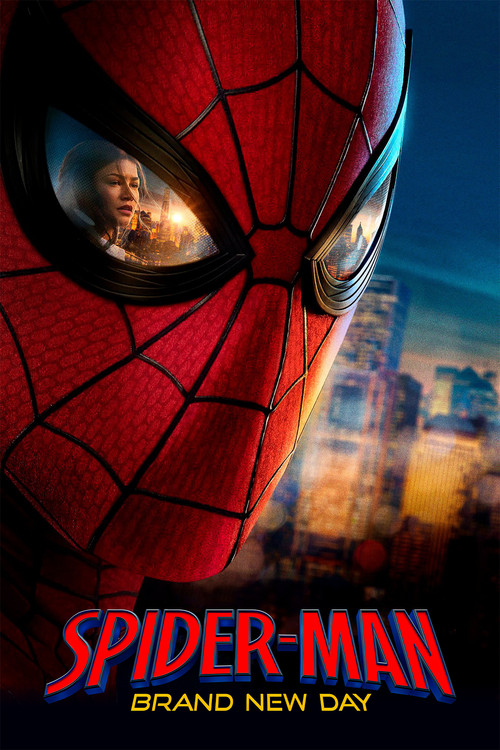
After the events of No Way Home, a spell was cast so that no one in the world remembers who Peter Parker is, and this has given him the freedom to fully dive in to his life as Spider-Man. The problem is this also means the two most important people in his life, his (now ex-)best friend Ned and his (now-ex)girlfriend, MJ, have also forgotten who he is. His desire to protect them is stronger than his yearning to reconnect, so while this setup leads to a very fun opening montage of Spidey facing off against one-off villains from his comics rogues gallery, this is contrasted of him almost mournfully watching their lives progress without him via social media stories.
The best thing about the preceding trilogy is the relationship and chemistry between these three characters, so upending that dynamic is a strong choice that sets up some legit character drama. In classic Spidey fashion, it completely sucks to be Spider-Man. Aside from the spell, he's also carrying the grief of losing his beloved Aunt May, which combined with the loss of his friends, has driven him to lose himself in his Spider-Man identity at the expense of his Peter Parker one.
This leads to a much more mature performance from Tom Holland, who gets to flex a little bit here, finally able to carry a movie on his own without having a Tony Stark to prop him up. He's always been the emotional crux of the MCU played against the larger than life heroes, and that continues here, complimented by the performances from Zendaya and Jacob Batalon. The movie is at its strongest when focusing on these three as events conspire to bring them together despite Peter's best efforts to stay away from them.
All of this is upended by Peter's body and powers beginning to change, the same way that people's bodies respond to grief, which is itself kicked into overdrive by the arrival of a villain who is able to mentally hop from person to person as a form of telepathic possession.
This leads him to team up with The Punisher (John Bernthal), who is the epitome of neglecting your personal life for your work life, and Bruce Banner (Mark Ruffalo), who knows a thing or two about having how a body transforms due to emotional stress. This is more of the fan-service I tend to dislike, but I'm not made of stone, and I can't pretend I didn't get giddy watching all of them in action together. They do also serve a story function, at least, as walking signposts of where Peter's life could lead if he can't get himself together.
Unfortunately, the villain (whose name I'll omit because spoilers) that brings them all together is the main problem of the movie. This is where the MCU falls prey to its own formula, in that while this new character, ably played by Sadie Sink, has a full character arc that is a skewed mirror of Peter's, her true identity is ultimately in service to setting up future franchises. This means that at some point the movie stops being about Spidey and becomes her origin story for about 20 minutes, setting up a whole new corner of the MCU, which, while long-awaited, is completely out of step with the true heart of the movie, Peter's broken relationship with his friends and whether he can move on or not. I just wish this character had her own movie, as the implications of what she introduces to the MCU are too large for the scope of the rest of the movie.
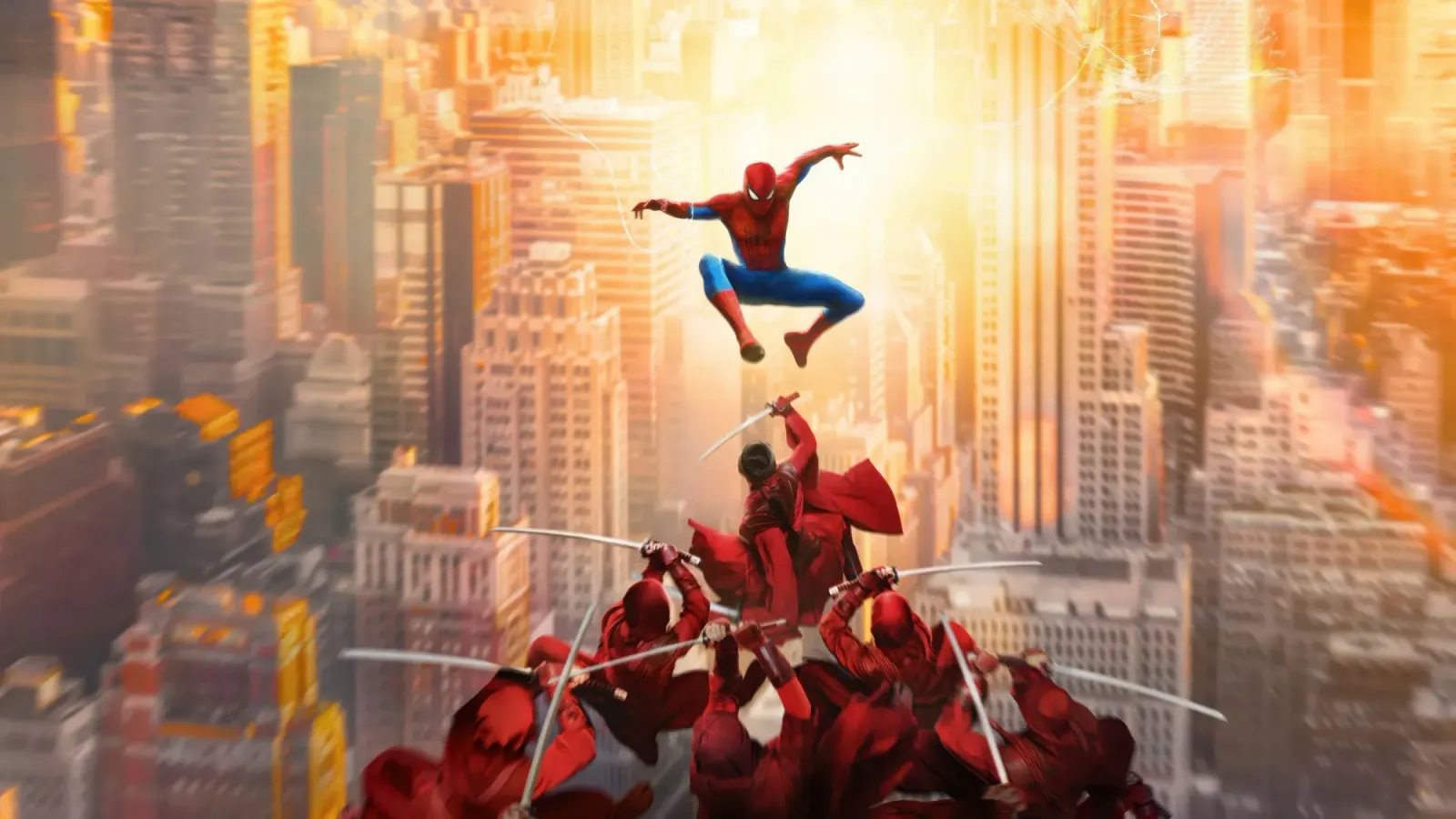
All that said, I still had a really fun time with this. The action and web-swinging are the best in all of the Spidey franchises, Daniel Destin Cretton getting so much out of stunt coordinator Peng Zhang's choreography. The marriage of Spider-Man's unique powers with martial arts style choreography seems like such a no-brainer I can't believe it hasn't been done before. The inclusion of The Hand, a secret ninja society borrowed from the Netflix MCU series serves little to the actual story, but serves up plenty of truly dynamic and breathtaking action when pitted against Spider-Man, using his powers and agility in creative and inventive ways against foes who can move through the air as lithely and quickly as he can.
I was also genuinely moved by a few scenes, particularly in a scene between Peter and MJ reckoning with the effects of the spell, and the resolution of Sadie Sink's character arc, particularly as it shows how despite everything, Peter is able to bring out the best in everyone around him, no matter how damaged they are.
In the end, despite the parts where the MCU has to be the MCU, I left the theater with same feeling of excitement I used to get when watching the Infinity Saga era movies. I was beaming, and dare I say, excited to see what might happen next for Peter Parker.
The Afterimage
I know the nature of the MCU being comics-as-movies means none of these movies will ever get to standalone on their own. In all fairness, that was what made me love these movies in the first place, seeing if the idea of episodic story-telling would work in a film medium. And yes, getting a chance to see all the stories I loved reading as a kid played out competently on the big screen and taken fairly seriously.
For as much as it was ad-libbed behind-the-scenes, the Infinity Saga at least felt like there was a point to all of this, that the fan-service and character reveals and shared universe were all in concert, promising a plan and payoff that would justify any missteps along the way, which I believe they achieved with Avengers: Endgame.
All of those storytelling choices have been leveled as criticisms against the MCU since its inception, and I didn't really understand that POV until the current Multiverse Saga. The pandemic definitely derailed things for the industry as a whole, much less the MCU, and they were also beset by things out of their control, like the untimely passing of Chadwick Boseman and the allegations against Jonathan Majors.
These pivots and the increasingly poor reception to he movies have made the intended march to what is now Avengers: Doomsday (previously Avengers: The Kang Dynasty until the aforementioned controversy with Jonathan Majors) seem at best, thin, if not completely without direction or a sense of inevitability. Characters and events have been introduced as important for the future only to never be referenced again, and the fan-service now seem like acts of desperation to keep interest in a flailing franchise that was once king of the mountain.
Spoiler Warning
With all this in mind, the introduction of Sadie Sink's Jean Grey into the MCU in Brand New Day kinda threw me for a loop, and is what has stuck with me most since watching the movie.
As much as I liked that Jean's story arc is an interesting parallel to Peter's story, in regards to coming to terms with new powers and being unable/unwilling to deal with one's grief , introducing the concept of mutants to the MCU and the attached cultural baggage of what they represent felt like a subplot that was threatened to overwhelm the otherwise very personal story. Particularly as in an attempt to suppress his new powers, Peter essentially creates a power inhibitor that is eventually used on Jean Grey. Mutants in Marvel Comics are people born with their powers, born different with all the cultural baggage that entails, and the use of devices to suppress/cure mutants of their powers, usually by force, is a huge idea that I feel deserves its own movie to truly explore.
I fully accept this is a me problem, because I am a fan of the X-Men and Marvel lore in general, and that casual viewers probably aren't going to care. But I still feel it could be frustrating for any kind of viewer, as the movie shifts into a completely different gear to allow Jean an origin story that would be better served as full movie on its own. The rest of the movie is grounded in Peter's emotional conflict about his friends, and the mutant angle just feels like a completely different movie, like I had flipped the channel.
It's just the kind of thing that only happens because this movie has to shoehorn in a springboard for a future franchise, and it comes at the expense of what was otherwise fully contained story. Whatever parallels Jean's story has to Peter's I felt were already covered by the inclusion of the Punisher and the Hulk, both very on the nose "this could be you if you're not careful" warnings for Peter. I was excited to finally have an MCU movie that could just be its own thing, and Jean's story just pulled me right and reminded me what I'd actually signed up for.
Ultimately, I know it's not actually a big deal. This is just me doing some nerd complaining, and it's probably not going to matter anyway after Avengers: Doomsday and Avengers: Secret Wars are likely to reboot the whole thing. I did have a lot of fun with the movie, but this has been a little splinter in my mind ever since, and I just had to get it all out and try to make sense of it.